
Monument signs are one of the most effective ways to put your business on the map, literally. If you’re thinking about installing one, the permitting process is something you’ll want to understand well before any fabrication begins. Skipping this step, or underestimating it, can lead to delays, fines, or even having to remove a sign you just paid to install. Here’s what you need to know going in.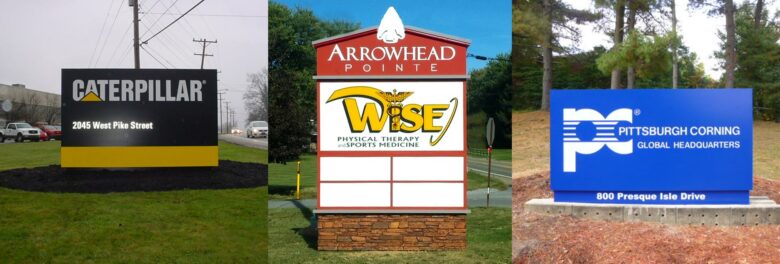
Why Permits Matter More Than People Expect
A lot of business owners assume permitting is just a formality, a quick approval you tick off the list. In reality, sign permits are taken seriously by local municipalities, and monument signs in particular tend to draw attention because of their size and permanent placement. Townships and boroughs across the region, from Pittsburgh and the surrounding suburbs to communities like Greensburg, Murrysville, and Latrobe, each have their own sign ordinances. What’s allowed in one town may be outright prohibited in another.
Permits protect everyone. They confirm that your sign meets local zoning codes, height restrictions, setback requirements, and safety standards. Without one, you’re exposed to code violations, stop-work orders, and the headache of appeals. Getting it right from the start saves real time and money.
What Local Ordinances Typically Cover
Sign ordinances vary, but most municipalities regulate a handful of common factors for monument signs:
- Maximum height and width of the sign structure
- Setback distance from the road, sidewalk, or property line
- Illumination rules, including whether LED or electronic message center displays are permitted
- Landscaping requirements around the base of the sign
- Variance procedures if your property doesn’t meet standard requirements
In some areas, especially along busy commercial corridors in Pittsburgh or historic districts in places like Uniontown, there may be additional layers of review. Knowing your local code before you finalize a design prevents expensive changes down the road.
The Application Process, Step by Step
Generally speaking, here’s how the permitting process tends to unfold for a monument sign installation.
Start with a Site Survey
Before any application is submitted, it helps to understand the specific conditions of your property. Lot dimensions, the position of utilities, and proximity to the road all factor into what you can build and where you can place it.
Review the Local Sign Code
Your municipality’s sign ordinance is usually available through the township or borough office. Some are straightforward; others require a careful read. This is where working with an experienced sign company makes a real difference. We’ve handled permitting across communities throughout the Pittsburgh area, Greensburg, Latrobe, Murrysville, Uniontown, and beyond, so we know the nuances that trip people up.
Prepare and Submit Your Documents
Most permit applications require scaled drawings of the proposed sign, including dimensions, materials, and placement on the property. Electrical plans are often needed for illuminated signs. The sign company you work with should be able to supply professional drawings that meet the municipality’s submission requirements.
Wait for Approval and Inspections
Processing times vary widely. Some municipalities turn permits around in a week or two; others take considerably longer, especially if a variance or zoning board review is required. Plan for this in your project timeline. Once the sign is installed, an inspection may be required before it’s considered officially approved.
How We Handle Permitting for Our Clients
Permitting is one of those things that sounds simple until you’re in the middle of it. We’ve been doing this for nearly 30 years as a family-owned business based right here in Jeannette, PA, and we’ve navigated the permit process for monument signs across dozens of municipalities in western Pennsylvania. We handle the drawings, the applications, and the communication with local offices so our clients don’t have to manage that on top of everything else running a business demands.
As members of both the International Sign Association and the United States Sign Council, we stay current on industry standards and best practices, which matters when you’re working through technical requirements with a municipal reviewer.
If you’re planning a monument sign for your business this fall or have questions about what the permitting process looks like in your specific area, give us a call or drop us an email. We’re happy to walk you through it.